
Starting to invest early can be challenging.
As you enter the workforce after college, numerous immediate priorities are vying for your attention:
➡ Settling into post-graduation life
➡Considering marriage
➡Repaying student loans
Once you’re married, a new set of priorities comes up:
➡Deciding whether to buy or rent a home
➡Planning for your children’s education costs
➡Evaluating your career path
With so many pressing concerns, it’s easy to see why investing for the future might not be a top priority.
Saving for a version of yourself 40 years from now can feel counterproductive when you’re worried about more immediate financial obligations, like paying health insurance deductibles.
I understand these challenges but stay with me.
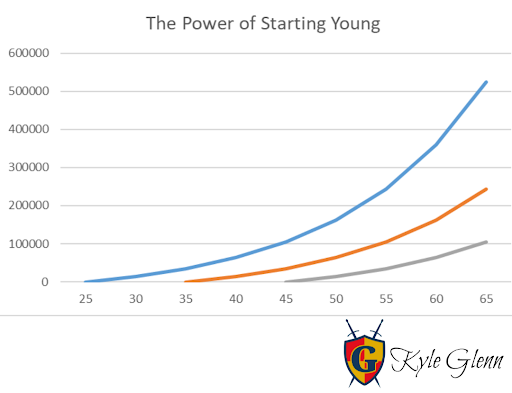
Consider this scenario:
Let’s look at three different people
- Ages 25, 35, and 45
- Each invests $200 a month
- Each earns a perfect 7% annual return
Those who start investing at 25 will have nearly $300k more than those who start at 35!
To achieve the same result:
The 35-year-old will need to save $430 per month ($230 more!)
The 45-year-old will need to save $1,008 per month ($808 more!)
Starting early requires less effort than starting later.
This is just one way working with a financial planner can help you get to where you want to go!
Remember, these numbers are for educational purposes only and don’t guarantee any results. But they illustrate a crucial point: starting to invest early can significantly impact your financial future.
